If you’ve shopped for a heavy trailer, you’ve seen the term tandem axle trailer. It simply means a trailer with two axles mounted close together, one behind the other. This guide explains what a tandem axle is, why heavy trailers use them, the common types of trailer axles, and how tandem duals work on a car hauler.
What is a tandem axle trailer?
A tandem axle trailer (also called a double axle or dual axle trailer) has two axles side by side near the middle or rear of the trailer instead of one. The two axles share the trailer’s weight, so each axle, tire and brake carries less of the load.
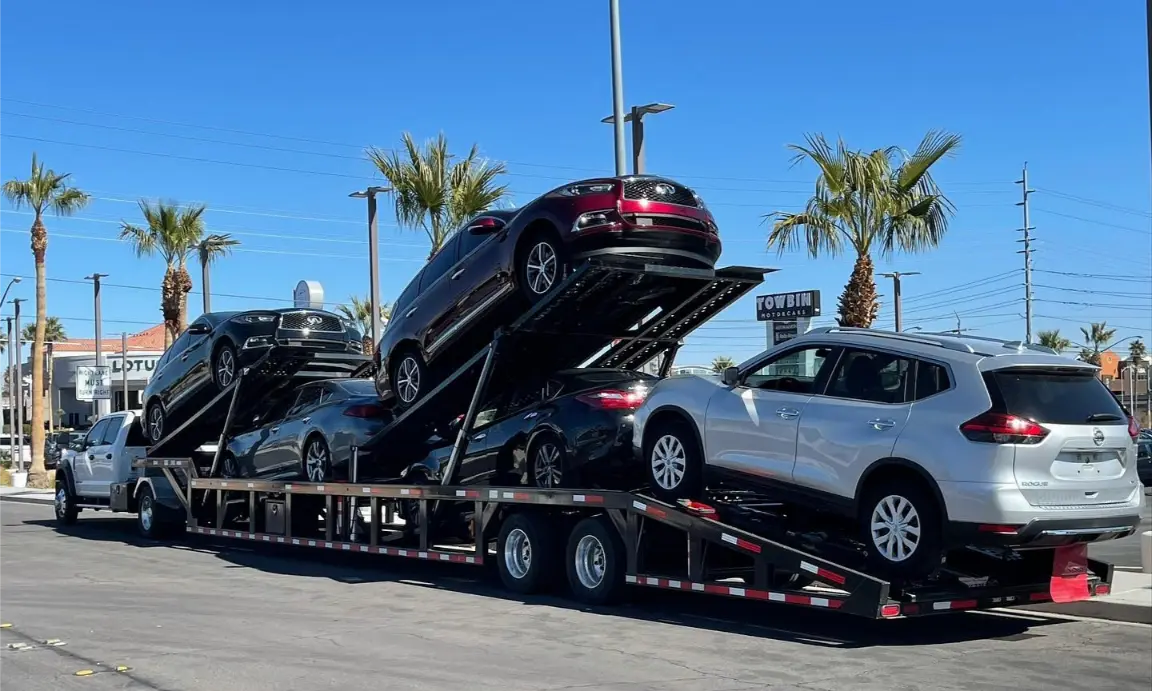
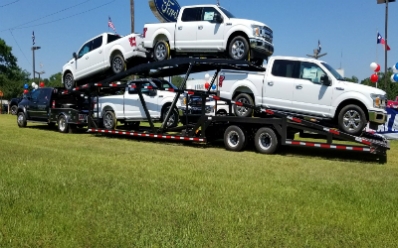
Tandem axles are standard on most heavy trailers: car haulers, equipment trailers, flatbeds and large campers. Single axle trailers are mostly used for light loads like small utility or boat trailers.
Benefits of tandem axles
- More capacity: two axles carry more weight than one, which is why heavy trailers are built this way.
- Better stability: the trailer tracks straighter and is less prone to sway at highway speed.
- More braking: brakes on both axles give you more stopping power under load.
- Safer if a tire fails: if one tire blows, the other axle helps hold the trailer up while you pull over.
- Smoother ride: the load is spread over more tires, which is easier on the trailer and the cargo.
The trade-offs are a higher purchase price, more tires to replace, and more tire scrub in tight turns.
Single, tandem and dual wheels: what’s the difference?
- Single axle: one axle with a wheel on each side.
- Tandem axle: two axles, each with a wheel on each side (four tires).
- Tandem duals: two axles with two wheels on each end (eight tires). Duals add capacity and stability for the heaviest trailers.
Types of trailer axles
Trailer axles are also grouped by how they’re sprung and braked:
- Leaf spring axles use stacked steel springs. They’re simple and easy to repair, and common on utility and equipment trailers.
- Torsion axles use rubber cords inside the axle tube for independent suspension and a quieter ride.
- Heavy-duty suspension systems (like the Hutchens 9700 used on Infinity trailers) are built for constant heavy loads.
- Brakes: heavy trailers use electric, electric over hydraulic, or air brakes. Infinity trailers use electric over hydraulic brakes; we don’t offer air brakes.
Axle capacity matters as much as type. A trailer’s total capacity depends on the rating of its axles, tires, frame and suspension together.
Tandem duals on Infinity car haulers
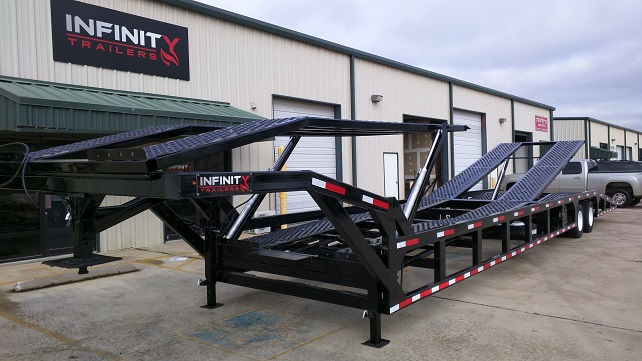
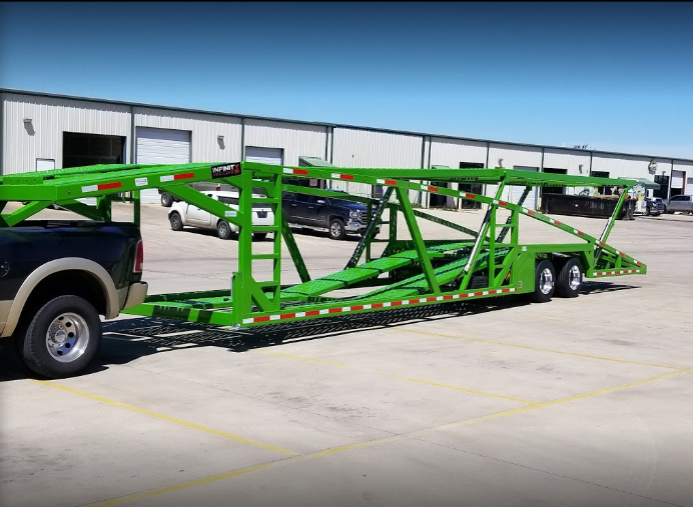
Every Infinity Trailers car hauler rides on Dexter tandem dual axles with Dexter hydraulic brakes and a Hutchens 9700 suspension system, with nine Roadmaster 235/75R17.5 18 ply tires (eight on the axles plus a spare). The trailers have a 25,900 lb GVWR.
- 4 car and 5 car haulers (GN450, GNW450, GN500, GNW500, GN550 and GNW550) come with two 12K lb axles, with an upgrade to 15K axles for $2,000. Alcoa aluminum wheels ($1,600) are available with the 15K axles.
- 6 car haulers (GN600 and GNW600) come with 15K axles standard.
Your truck needs an electric over hydraulic brake controller to run the trailer brakes. We recommend the Tekonsha Prodigy P3 if your truck doesn’t already have an integrated controller.
Caring for tandem axles
- Check tire pressure and tread on all eight tires before every trip; uneven wear can point to an alignment or axle problem.
- Inspect the brakes, brake lines and hydraulic fluid regularly.
- Grease and inspect the wheel bearings and hubs on schedule.
- Check the suspension and look for loose or worn parts.
- Torque the lug nuts to spec, especially after new tires or wheels.
See our full car hauler maintenance checklist for more.
Find the right car hauler
Compare all our 4, 5 & 6 car auto hauler trailers, with axles, tires and options listed on every model, or call us at 806-655-5500.