This is a general overview of federal inspection rules, not legal advice. Rules can change, so check the current regulations and talk with your insurance agent or a compliance professional about your operation.
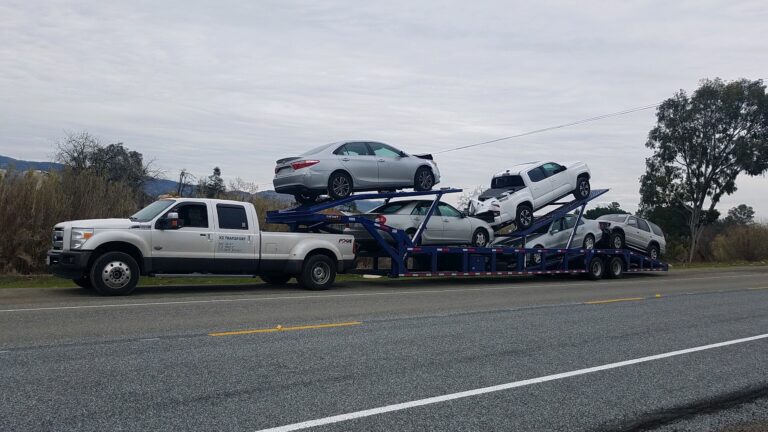
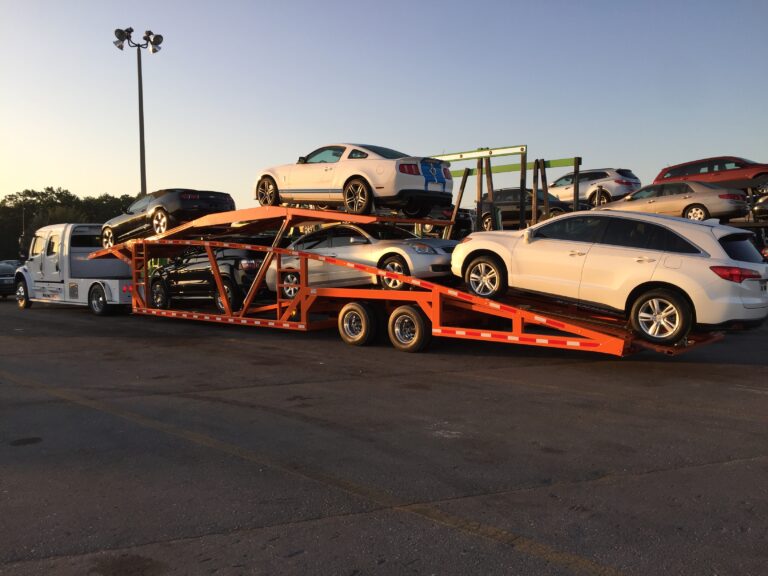
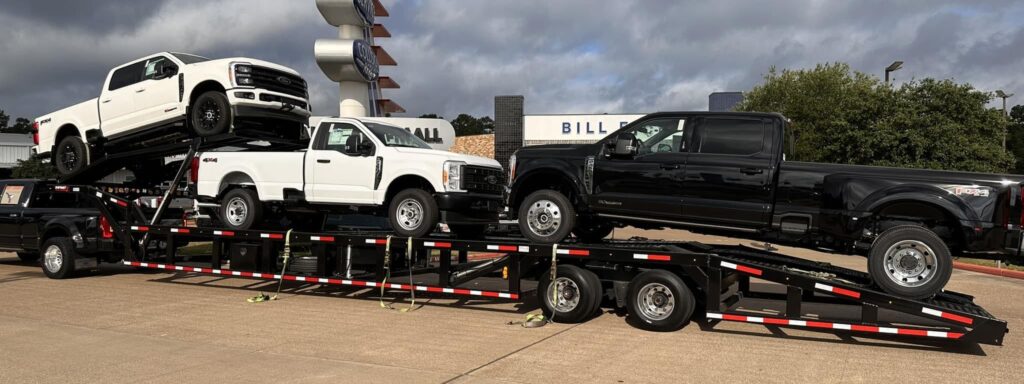
If you run a 4, 5 or 6 car hauler for hire, inspections aren’t optional. Federal rules spell out three kinds you need to know: the pre-trip check you do before driving, the driver vehicle inspection report at the end of the day, and the annual (periodic) inspection of every unit, including the car hauler trailer itself. Here’s what each one requires, a practical checklist for a multi car trailer, and how long to keep the paperwork.
Who these rules apply to
The FMCSA inspection rules in 49 CFR Part 396 cover commercial motor vehicles. Under federal rules, a vehicle or combination with a weight rating of 10,001 lb or more, used in business across state lines, is a commercial motor vehicle (49 CFR 390.5). Every Infinity car hauler trailer carries a 25,900 lb GVWR, so if you haul for hire across state lines, your truck and trailer fall under these rules. If you’re not sure where your operation stands, see our guide to CDL requirements for car haulers.
1. The pre-trip inspection (before you drive)
Before driving, the federal rule says the driver must be satisfied that the vehicle is in safe operating condition. If the last end-of-day report listed defects, the driver must review it and sign to acknowledge the review and that required repairs were made (49 CFR 396.13).
A good pre-trip on a car carrier trailer covers:
- Coupling: kingpin locked in the fifth wheel jaws, no gap between plates, release handle locked, landing jack fully raised
- Electrical: 7-way plug and dual pole charge line connected; all lights, turn signals, brake lights and clearance lights working
- Brakes: trailer brakes responding to the truck’s brake controller; no hydraulic fluid leaks at the wheels
- Tires and wheels: pressure checked cold against the tire sidewall or placard, no cuts or bulges, lug nuts tight, no cracked wheels; spare tire in its holder
- Axles and suspension: no broken springs or loose hangers, nothing hanging or rubbing
- Decks and ramps: hydraulic ramps and tilt decks stowed and locked, upper decks secured at travel height, no hydraulic leaks at the cylinders
- Load: every vehicle strapped, straps in good shape and tight, nothing loose on the decks
- Truck: mirrors, wipers, horn, emergency equipment
2. The driver vehicle inspection report (end of each day)
At the end of each day’s work, drivers must prepare a written report on each vehicle they operated (49 CFR 396.11). At a minimum it covers:
- Service brakes, including trailer brake connections
- Parking brake
- Steering mechanism
- Lights and reflectors
- Tires, wheels and rims
- Horn, windshield wipers and rear vision mirrors
- Coupling devices
- Emergency equipment
If the driver finds no defects, the federal rule doesn’t require a written report. If there is a defect that affects safety, it must be repaired (or certified as not needing repair) before the vehicle is driven again, and the report and certification must be kept for three months.
A tip for owner-operators: the rule lists some exceptions, including carriers that operate only one commercial motor vehicle. Read the current text of 396.11 or ask a compliance professional before you rely on an exception. Many experienced haulers keep a daily written report either way, because it protects them at a roadside inspection and keeps small problems from turning into breakdowns.
3. The annual (periodic) inspection
A carrier may not use a commercial motor vehicle unless each component listed in Appendix A to Part 396 has passed an inspection at least once in the preceding 12 months (49 CFR 396.17). The rule spells out that each vehicle in a combination counts. That means your truck and your car hauler trailer each need their own annual inspection.
A few details worth knowing:
- Proof: keep the inspection report, or put a sticker or decal on the vehicle showing the inspection date, where the report is kept, the vehicle’s identification and that it passed.
- Who can inspect: a qualified inspector. That can be you, if you’re qualified, or a commercial garage or similar business acting as your agent.
- State programs: a passing inspection under a qualifying state program counts for 12 months from the last day of the month it was done.
Put the trailer’s annual inspection date on your calendar. Many owners schedule it together with the trailer’s yearly axle service so the trailer is only out of work once.
4. Records you need to keep
Carriers must systematically inspect, repair and maintain every vehicle they control, and keep a record for each one showing its identification, upcoming inspection and maintenance due dates, and what repairs were done and when (49 CFR 396.3). Those records must be kept for one year where the vehicle is housed or maintained, and for six months after the vehicle leaves your control.
A simple binder or spreadsheet for the trailer works fine. Include:
- The trailer’s VIN and model (for example, GN550)
- Annual inspection date and who did it
- Axle, bearing and brake service dates
- Tire replacements
- Hydraulic pump, ramp and tilt-deck repairs
- Copies of end-of-day reports that listed defects, and the repair certifications
Don’t forget the axles
Inspections catch problems, but scheduled maintenance prevents them. Infinity trailers ride on Dexter axles with hydraulic brakes. Dexter’s service manual calls for lubricating wheel bearings every 12 months or 12,000 miles. Car haulers rack up miles fast, so for most haulers the mileage comes first. Our car hauler maintenance checklist lays out the full schedule, from before every trip to once a year.
Quick inspection checklist
| When | What | Keep records for |
|---|---|---|
| Before each trip | Pre-trip check; review and sign the last report if it listed defects | Not specified |
| End of each day | Driver vehicle inspection report (if defects found) | 3 months |
| At least every 12 months | Annual inspection of the truck and of the trailer | Report or decal on the unit |
| Ongoing | Maintenance and repair records for each vehicle | 1 year (6 months after it leaves your control) |
Frequently asked questions
Does my car hauler trailer need its own annual inspection?
Yes. The federal rule treats each vehicle in a combination as its own commercial motor vehicle, so the trailer and the truck each need an annual inspection.
Can I do the annual inspection myself?
Only if you meet the federal qualifications for an inspector. Otherwise, use a qualified commercial garage or shop as your agent.
What should I focus on before a roadside inspection?
Lights, brakes, tires, coupling and load securement are all on the inspector’s list. A daily walk-around that covers those five catches most problems before an inspector does.
Built to pass inspection, day after day
Every Infinity car hauler comes with Dexter axles and hydraulic brakes, Optronics LED lighting and a one-year warranty against manufacturing defects in workmanship. Browse our 4 car, 5 car and 6 car hauler trailers for sale, or contact us in Haslet, Texas.
Last reviewed November 18, 2026.
Sources: