Sooner or later, every car hauler gets the call: the car runs, but it doesn’t drive. Maybe it has a dead battery, a bad transmission, flood damage or no keys. Inoperable vehicles show up all the time in dealer trades, auction runs and repo work, and they can be good business for a hauler with the right setup. They also take more time, more care and more equipment than a car you can drive up the ramp. Here’s how to decide when non-running vehicles are worth taking, what your multi car trailer needs, and how to load them safely.
Why inoperable vehicles are different
A running car loads under its own power: you drive it up, set the parking brake and strap it. A non-runner can’t do any of that for you. That means:
- You need a winch (or a lot of help) to get the car up the ramps and onto the deck.
- Brakes, steering and park may not work, so the car can roll or drift while you’re moving it.
- Loading takes longer, which matters when you have several pickups scheduled in one day.
- There’s more risk of damage to the vehicle, the trailer or you, especially if something lets go on the ramp.
None of that is a reason to turn the work down. It’s a reason to plan the load, charge for the extra time and have the right equipment.
Equipment that makes non-runners manageable
- A properly rated winch. Infinity offers a 12K WARN VR12 wireless winch as a $1,500 upgrade on our car hauler trailers. A wireless remote lets you watch the car and the line from a safe spot while you pull.
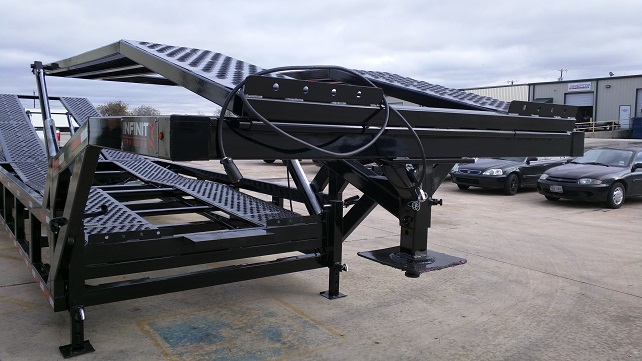
- Hydraulic ramps. Every Infinity trailer comes with hydraulic loading ramps standard, so you’re not wrestling heavy ramps into place by hand before a long winch pull.
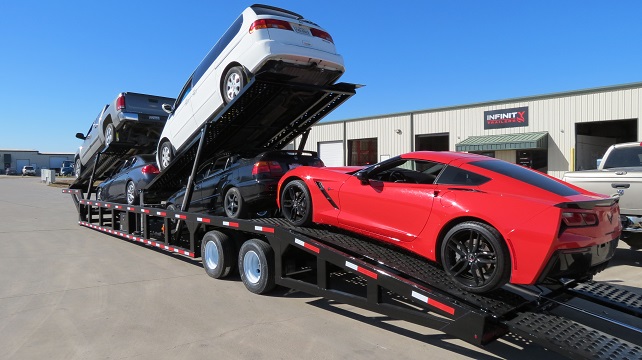
- Tilt decks on low pro models. On our 53-foot low pro car haulers with hydraulic tilt decks, a gentler loading angle helps when you’re pulling a car with low ground clearance.
- Wheel straps and recovery gear. Every Infinity car hauler comes with 20 over-the-wheel straps. Add a snatch block, recovery straps rated for the job, wheel chocks, a jump pack and a tire inflator.
Before you accept the load
Most problems with non-runners start with not knowing what you’re picking up. Get answers in writing first:
- Does it roll? Will the wheels turn, and will it shift into neutral?
- Does the steering turn, or is it locked?
- Are all four tires holding air, and are all wheels on the car?
- Are the keys with the vehicle?
- Is there damage that affects where you can attach a winch line or strap?
- Will someone be there with a forklift or help if it won’t roll?
If the answers aren’t clear, price for the worst case or pass. A car with locked wheels and no keys can turn a quick stop into a long afternoon.
How to load a non-running vehicle safely
- Inspect and photograph the car first. Note existing damage on the condition report and have the shipper sign it.
- Line it up straight with the ramps, on level, firm ground if you can.
- Attach the winch line to a solid structural point, such as the manufacturer’s tow hooks or frame, never to suspension or steering parts. Use a proper strap or bridle so the pull is straight.
- Keep everyone out of the line of pull. Use the wireless remote so you can stand off to the side, and use a spotter to watch the car’s alignment.
- Pull slowly and steadily. If the car binds or drifts, stop, reset and try again. Don’t force it.
- Chock and strap once it’s in position. Don’t rely on the winch alone to hold the car for the trip. Secure it with your wheel straps like any other vehicle.
- Re-check the straps after the first few miles and at each stop.
The federal securement rules still apply to inoperable vehicles, including at least two tiedowns per car and enough working load limit. Our guide to car hauler securement rules covers the math, and our article on how to load and strap cars on a car hauler covers load order.
Plan where non-runners go on the trailer
- Think about unloading first. A non-runner has to come off the trailer the same hard way it went on. Put it where you can winch it off without moving other cars.
- Keep weight balanced over the axles and the kingpin, the same as any load.
- Don’t block the winch path to other cars you’ll need to reach first.
Is the extra work worth the extra pay?
Inoperable vehicles usually pay more because they take more time and carry more risk. Whether that premium is worth it depends on your equipment, your schedule and your process. Price non-runners based on:
- The extra loading and unloading time at both ends.
- Whether it will disrupt the rest of your day’s pickups.
- The condition questions above, and whether help will be there.
- The added risk of damage, and what your cargo insurance covers.
Haulers who set up for this work, with a good winch, a clear checklist and good photos, often find it’s a steady source of loads from auctions and dealers. If you’re figuring out where loads come from, see our guide on how to find car hauling loads.
Frequently asked questions
Do I need a winch on my car hauler?
Not to haul running cars. If you plan to take auction, repo or dealer work with non-running vehicles, a properly rated winch is one of the most useful upgrades you can add. Infinity offers a 12K WARN VR12 wireless winch for $1,500.
Can I use the winch as one of my tiedowns?
Plan on securing every vehicle with your wheel straps once it’s in position, and don’t count on the winch to hold it for the trip. That keeps you clearly within the securement rules and takes the load off the winch.
What if the car won’t roll at all?
Locked wheels or a car stuck in park needs more than a winch, and dragging it can damage the car and your trailer. Ask before you accept the load whether the shipper can provide a forklift, go-jacks or help on site.
Set up your trailer for any load
Browse our 4 car, 5 car and 6 car haulers for sale, see financing options, or contact Infinity Trailers in Haslet, Texas, to add the WARN winch to your build.
Last reviewed November 18, 2026.