Hitch class is the first thing to check before you tow anything. The class tells you how much trailer weight a receiver hitch is built to handle and what size receiver it uses. This guide explains the five trailer hitch classes, the main types of trailer hitches, and which hitch you need for a heavy trailer like a car hauler.
Trailer hitch classes at a glance
Receiver hitches are grouped into Class I through Class V. Exact ratings vary by manufacturer, so always read the label on your hitch, but these are typical figures:
| Class | Receiver size | Typical max trailer weight | Typical vehicles |
|---|---|---|---|
| Class I | 1-1/4″ | Up to 2,000 lb | Small cars and crossovers |
| Class II | 1-1/4″ | Up to 3,500 lb | Mid-size cars, minivans, small SUVs |
| Class III | 2″ | About 6,000–8,000 lb | Half-ton pickups and full-size SUVs |
| Class IV | 2″ | Up to about 10,000 lb | Full-size pickups and SUVs |
| Class V | 2″ or 2-1/2″ | Up to about 17,000–20,000 lb | Heavy-duty and commercial trucks |
Two numbers matter on every hitch: gross trailer weight (GTW), the total loaded weight of the trailer, and tongue weight (TW), the downward force the trailer puts on the hitch, usually around 10–15% of GTW.
What the hitch classes mean
Class I and Class II
Light-duty hitches with a 1-1/4″ receiver, used for bike racks, cargo carriers and small utility or jet ski trailers. Class II is a stronger version of Class I with the same receiver size.
Class III
The most common hitch on pickups and SUVs. It uses a 2″ receiver and handles travel trailers, boats and small equipment trailers. Many Class III hitches can tow more with a weight distribution system.
Class IV
A heavier version of Class III with the same 2″ receiver, built for bigger campers, boats and livestock trailers behind full-size trucks.
Class V
The heaviest receiver hitches, with a 2″ or 2-1/2″ receiver, for heavy-duty pickups and commercial trucks.
Types of trailer hitches
Receiver hitches are only one of the main hitch types:
- Receiver hitch: mounts under the rear bumper and takes a ball mount. Rated by the classes above.
- Weight distribution hitch: an add-on for receiver hitches that spreads tongue weight across the truck and trailer axles.
- Gooseneck hitch: a ball mounted in the truck bed, over or just ahead of the rear axle.
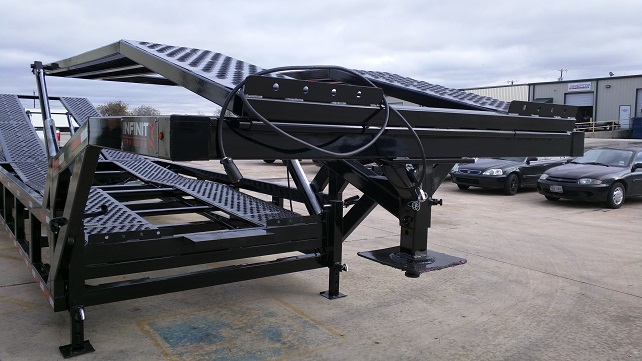
- Fifth wheel hitch: a plate mounted over the rear axle (in the bed or on a flatbed or chassis cab) that locks onto a kingpin on the trailer. Used for the heaviest trailers.
- Pintle hitch: a hook and ring setup used for some heavy farm, construction and military trailers.
Which hitch do you need for a car hauler?
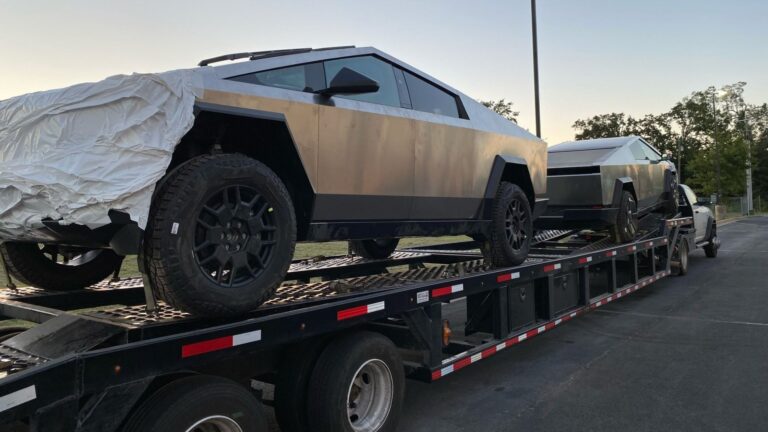
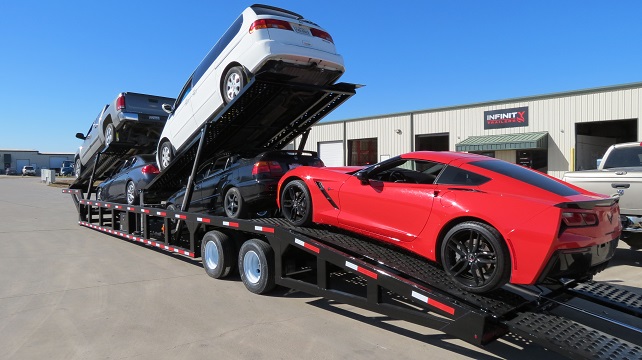
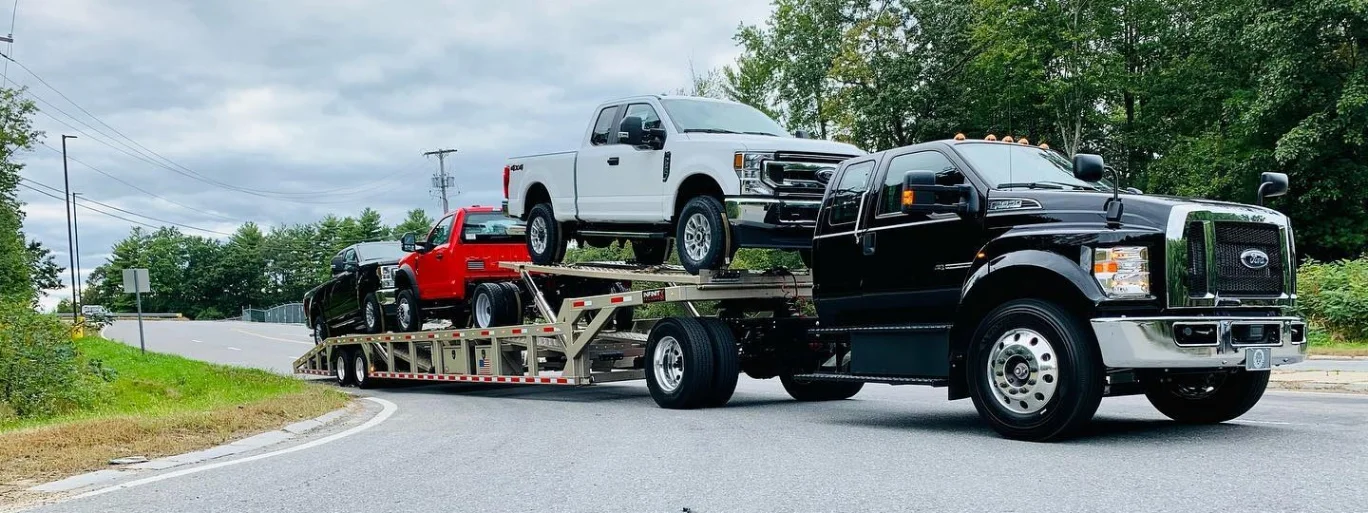
A multi-car hauler is far heavier than any receiver hitch is built for. Infinity Trailers 4, 5 and 6 car haulers have a 25,900 lb GVWR, so they’re built for a fifth wheel only, never a bumper-mounted receiver hitch. We also don’t build for gooseneck ball hitches, because we believe a fifth wheel is safer for the weight of a loaded car hauler.
To tow an Infinity trailer, your truck needs:
- A fifth wheel setup with a 2″ kingpin and 32K or greater capacity
- Fifth wheel height of 46″–47″, measured from the ground to the top of the fifth wheel plate
- At least 54″ of clearance from the center of the fifth wheel to the cab
- A 7 way RV style plug (female), a Phillips 2-way pole socket #15-326, and an electric over hydraulic brake controller
Need a fifth wheel installed? Our FAQ lists installers we’ve worked with. For more detail, read gooseneck vs fifth wheel car hauler trailers and what truck you need to tow a car hauler.
How to hitch up safely
- Check the ratings: your truck’s towing capacity, the hitch rating and the trailer’s loaded weight. The lowest number is your limit.
- Line up the truck slowly and couple the trailer (ball to coupler, or fifth wheel to kingpin) until it locks.
- Confirm the lock: pull forward gently with the trailer brakes on, and check that the latch or jaws are fully closed.
- Connect safety chains where required and the electrical plug, and keep both off the ground.
- Raise the landing gear or jack fully, then test the trailer lights and brakes before you leave.
Texas also has its own rules on trailer brakes, safety chains and licensing. See our guide to Texas trailer and towing laws.
Trailer hitches: quick answers
What are the classes of trailer hitches?
Receiver hitches come in five classes. Class I (1-1/4″ receiver) tows up to about 2,000 lb, Class II (1-1/4″) up to about 3,500 lb, Class III (2″) about 6,000–8,000 lb, Class IV (2″) up to about 10,000 lb, and Class V (2″ or 2-1/2″) up to about 17,000–20,000 lb. Always go by the lowest rating among your hitch, ball mount and truck.
What are the three basic types of trailer hitches?
Receiver hitches, which mount at the rear of the truck (Classes I–V), fifth wheel hitches and gooseneck hitches, which both mount in the truck bed over the rear axle. Bumper and weight-distribution hitches are variations of the receiver style.
Which hitch can tow the most weight?
Fifth wheel and gooseneck hitches. Because they sit in the bed over the rear axle, they carry far more weight than any receiver hitch, which tops out with Class V. That’s why heavy car haulers use a fifth wheel.
What size is a Class 3 hitch receiver?
2 inches. Class IV hitches use a 2″ receiver too; Class I and II use 1-1/4″.
What hitch does an Infinity car hauler need?
A fifth wheel hitch for a 2″ kingpin, rated at 32,000 lb or more, set 46–47″ high (ground to the top of the plate), with at least 54″ from the center of the fifth wheel to the cab. Infinity car haulers are fifth wheel only; they don’t work with a gooseneck ball or a receiver hitch.
Shopping for a car hauler?
See our car hauler trailers for sale, built in Haslet, Texas, with prices listed on every model, or call us at 806-655-5500.