Hotshot trucking and flatbed trucking both haul freight on open decks, but they run on very different equipment and suit different businesses. If you’re starting out in auto transport, the choice also decides what kind of car hauler you’ll pull. This guide explains hotshot vs flatbed trucking: what each one is, the pros and cons, licensing, and where a multi-car hauler fits. See our hotshot car hauler trailer guide for models and prices.
What is hotshot trucking?
Hotshot trucking means hauling smaller, often time-sensitive loads with a heavy-duty pickup or medium-duty truck instead of a semi tractor. A typical hotshot rig is a one-ton dually (or larger chassis cab truck) pulling a gooseneck or fifth wheel trailer, often 20 to 40 feet long for general freight. Hotshot loads usually go straight from pickup to delivery.
What is flatbed trucking?
Flatbed trucking uses a Class 8 semi tractor pulling a full-size flatbed or step deck trailer, usually 48 to 53 feet long. These rigs carry much heavier freight than a hotshot setup: building materials, steel, machinery and other oversized loads.
Hotshot vs flatbed at a glance
| Hotshot | Flatbed (semi) | |
|---|---|---|
| Truck | Heavy-duty pickup or chassis cab | Class 8 semi tractor |
| Trailer | Gooseneck or fifth wheel, often 20–40 ft | Flatbed or step deck, 48–53 ft |
| Typical freight weight | Roughly 12,000–16,500 lb | Up to about 45,000 lb |
| Startup cost | Lower | Higher |
| Fuel and upkeep | Lower | Higher |
| Best for | Smaller, urgent and regional loads | Heavy, oversized, long-haul freight |
Pros and cons of hotshot trucking
Pros:
- Lower startup cost: a heavy-duty truck and trailer cost far less than a semi and a 53 ft flatbed.
- Lower fuel, insurance and maintenance costs.
- Easier to reach tight places like rural roads, dealer lots and residential streets.
- Quick turnaround on urgent, direct loads.
Cons:
- Less capacity per trip, so each load has to pay well.
- More wear on the truck, which is working near its limits.
- Rates and load volume can swing with the oil, gas and construction markets.
Pros and cons of flatbed trucking
Pros:
- Much more capacity per trip, and access to heavy and oversized freight.
- Steady demand from construction and manufacturing.
Cons:
- Higher costs for the truck, trailer, fuel and insurance.
- Always needs a CDL.
- Harder to maneuver in tight spaces.
- Lots of tarping and strapping on many loads.
Do you need a CDL for hotshot?
It depends on weight ratings, not the load. Under Texas DPS rules, a Class A license is required for a combination with a gross combination weight rating of 26,001 lb or more when the trailer’s GVWR is over 10,000 lb. Some hotshot drivers keep their truck and trailer under that line to run without a CDL, which limits what they can haul.
Multi-car haulers are heavier. Infinity car haulers have a 25,900 lb GVWR, so plan on a Class A license, and a Class A CDL if you’re hauling for hire. A combination over 26,000 lb also needs a USDOT number and, for Texas intrastate work, a TxDMV number. See our guide to Texas trailer and towing laws.
Hotshot car hauling: where a multi-car trailer fits
Many auto transporters start hotshot-style, with a heavy-duty truck pulling a car trailer. The trailer you pick sets your capacity:
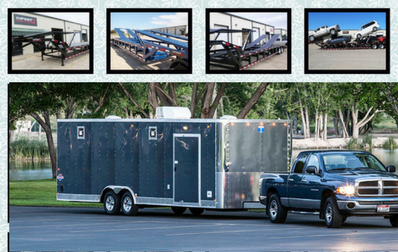
- Flatbed or wedge trailers carry one to three vehicles and work well for single cars, non-runners and tight deliveries.
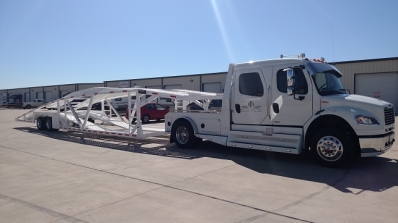
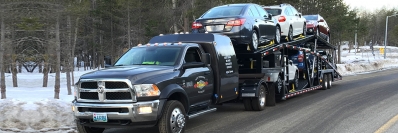
- Multi-car fifth wheel haulers carry four to six vehicles behind a hotshot truck, so you earn on more cars every trip without buying a semi.
- Semi car carriers carry eight or more vehicles, but need a Class 8 tractor and much more money up front.
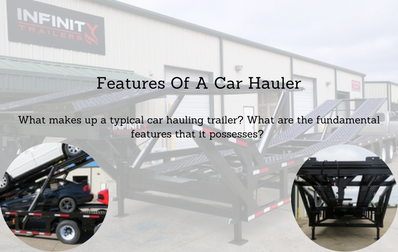
Infinity Trailers builds the middle option. Our GN models are built for chassis cab or hotshot trucks, where only the fifth wheel sits behind the cab, and our GNW models are built for trucks with a pickup bed. Choose from 4 car, 5 car or 6 car haulers, all with hydraulic loading ramps and Dexter tandem dual axles. See 4 car vs 5 car vs 6 car haulers to pick a size.
Which is better for you?
- Choose hotshot if you want a lower startup cost, regional or urgent work, and the flexibility to reach tight places. For auto transport, a hotshot truck with a 4–6 car hauler gives you semi-like capacity at a fraction of the cost.
- Choose flatbed if you want heavy or oversized freight, long-haul work, and you’re ready to invest in a semi and a CDL.
Starting a hotshot car hauling business?
Check the truck you need to tow a car hauler, explore car hauler trailer financing, and compare our 4, 5 & 6 car auto hauler trailers. Questions? Call or text 806-655-5500.